























In global agricultural sourcing, procurement directors and tea importers often experience severe "cost shock" on their first international bulk matcha shipments. A purchasing team might negotiate an attractive factory-gate quote of $28.00/kg for bulk matcha powder wholesale, only to discover that unbudgeted destination port surcharges, demurrage penalties, and customs tariffs inflate the final landed cost to $44.50/kg—destroying the profit models calculated in their matcha cost per cup calculation guide.
Even worse than financial loss is physical cargo degradation. Because matcha is a micro-milled, heat-sensitive agricultural product (typically with D90 ≤ 15μm), ocean transit through equatorial waters in standard, uninsulated dry shipping containers can expose cargo to temperatures exceeding 45°C (113°F). This heat wave permanently denatures chlorophyll, turning bright green tea into an oxidized, olive-brown powder before the container ever reaches customs inspection.
Choosing the correct Incoterms 2020 rule (FOB, CIF, or DDP) is not merely a legal formality; it dictates who controls container temperature, where transit cargo liability shifts, and who pays unexpected port clearance fees. This guide breaks down the financial and operational mechanics of each trade term specifically for commercial matcha buyers.
1. The Total Landed Cost Equation for Imported Matcha
A successful cross-border transaction requires calculating the full Total Landed Cost (TLC) per kilogram rather than comparing raw unit factory quotes.
Failing to allocate budget for destination handling (DTHC), phytosanitary inspection fees, and customs security filings can add 20% to 35% in unexpected overhead per shipment.
2. FOB vs. CIF vs. DDP: Strategic Breakdown for Tea Buyers
Evaluate these three core trade mechanisms based on your organization's internal logistics capability and annual purchasing volume.
FOB (Free On Board)
- Named Point: Port of Origin (e.g., FOB Shanghai / FOB Yokohama).
- Seller Scope: Export customs clearance, origin trucking, and loading cargo onto the ocean vessel.
- Buyer Scope: Ocean freight booking, marine insurance, import clearance, tariffs, and inland transport.
- Risk Transfer: Once goods are safely loaded on board the vessel.
- Best For: Enterprise chains (typically 10+ metric tons / FCL) with contracted ocean freight and Reefer carrier accounts.
CIF (Cost, Insurance & Freight)
- Named Point: Port of Destination (e.g., CIF Los Angeles / CIF Rotterdam).
- Seller Scope: Origin export, ocean freight payment, and baseline minimum cargo insurance (ICC-C).
- Buyer Scope: Import clearance, customs duties, destination terminal fees (DTHC), and inland delivery.
- Risk Transfer: At origin vessel loading (Buyer holds transit risk!).
- High Risk: Sellers select slow, hot dry-vans; destination forwarders charge extortionate CISF fees.
DDP (Delivered Duty Paid)
- Named Point: Buyer's Warehouse Door (e.g., DDP Chicago / DDP London).
- Seller Scope: 100% full journey: export, ocean/air shipping, marine insurance, import customs, duties/taxes, and final door delivery.
- Buyer Scope: Receiving and unloading pallets at destination facility.
- Risk Transfer: At buyer's warehouse gate.
- Best For: Growing franchises, regional cafes, and brands prioritizing 100% cost certainty.
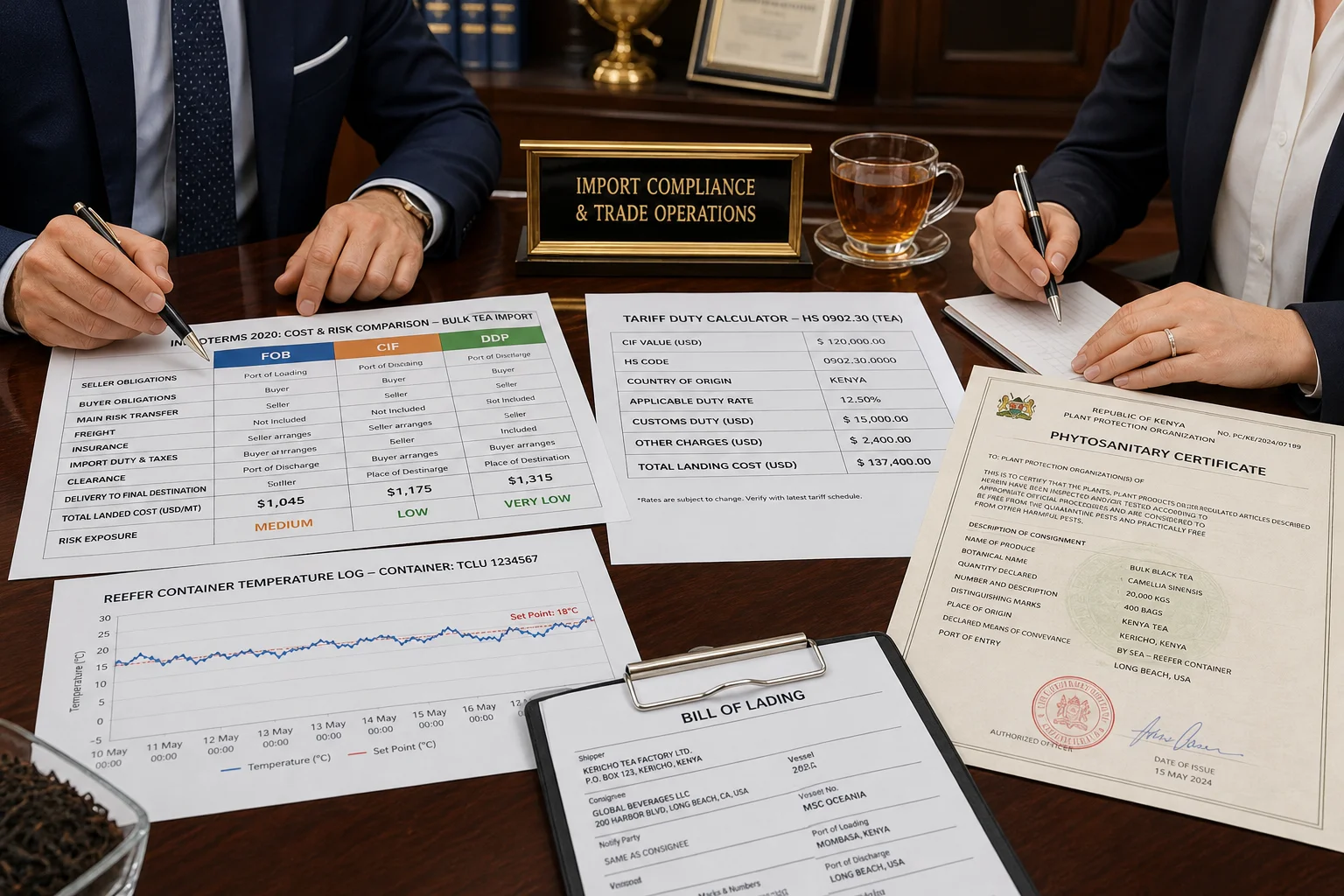
3. Comprehensive Incoterms 2020 Comparison Matrix
This master matrix cross-references cost allocations, risk transition points, and operational control factors across the global supply chain.
| Operational Responsibility | FOB (Free On Board) | CIF (Cost, Insurance, Freight) | DDP (Delivered Duty Paid) |
|---|---|---|---|
| Export Customs & Phytosanitary Cert | Seller Managed & Paid | Seller Managed & Paid | Seller Managed & Paid |
| Ocean Freight Booking & Cost | Buyer Managed & Paid | Seller Managed & Paid | Seller Managed & Paid |
| Reefer / Temperature Control Choice | Buyer Fully Controls | Seller Controls (Often Dry Van) | Seller Contractually Mandated |
| Transit Damage / Oxidation Risk | Buyer Bears (Insure via Cargo Policy) | Buyer Bears (High Dispute Rate) | Seller Bears until Door Delivery |
| Destination Port Surcharges (DTHC/CISF) | Buyer Pays (Contracted Forwarder Rates) | Buyer Pays (Risk of Predatory Fees) | Seller Absorbs & Pays |
| Import Tariffs, Duties & VAT | Buyer Pays | Buyer Pays | Seller Clears & Pre-Pays |
| Final Inland Warehouse Delivery | Buyer Arranges & Pays | Buyer Arranges & Pays | Seller Arranges & Delivers to Door |
4. 4 Matcha-Specific Cross-Border Trade Traps to Avoid
When executing international contracts for wholesale green tea, audit these four high-frequency commercial hazards.
5. 4-Step Protocol for Zero-Risk Matcha Procurement
Integrate this contract execution workflow into your standard matcha vendor scorecard evaluation framework.
Specify Term & Location
State exact Incoterms rule and named port/door: e.g., "DDP Buyer Warehouse, Dallas, TX (Incoterms 2020)".
Mandate Thermal Protection
Write Reefer container requirements (10°C–15°C) or thermal reflective container liners into the technical purchase contract.
Pre-Audit Documentation
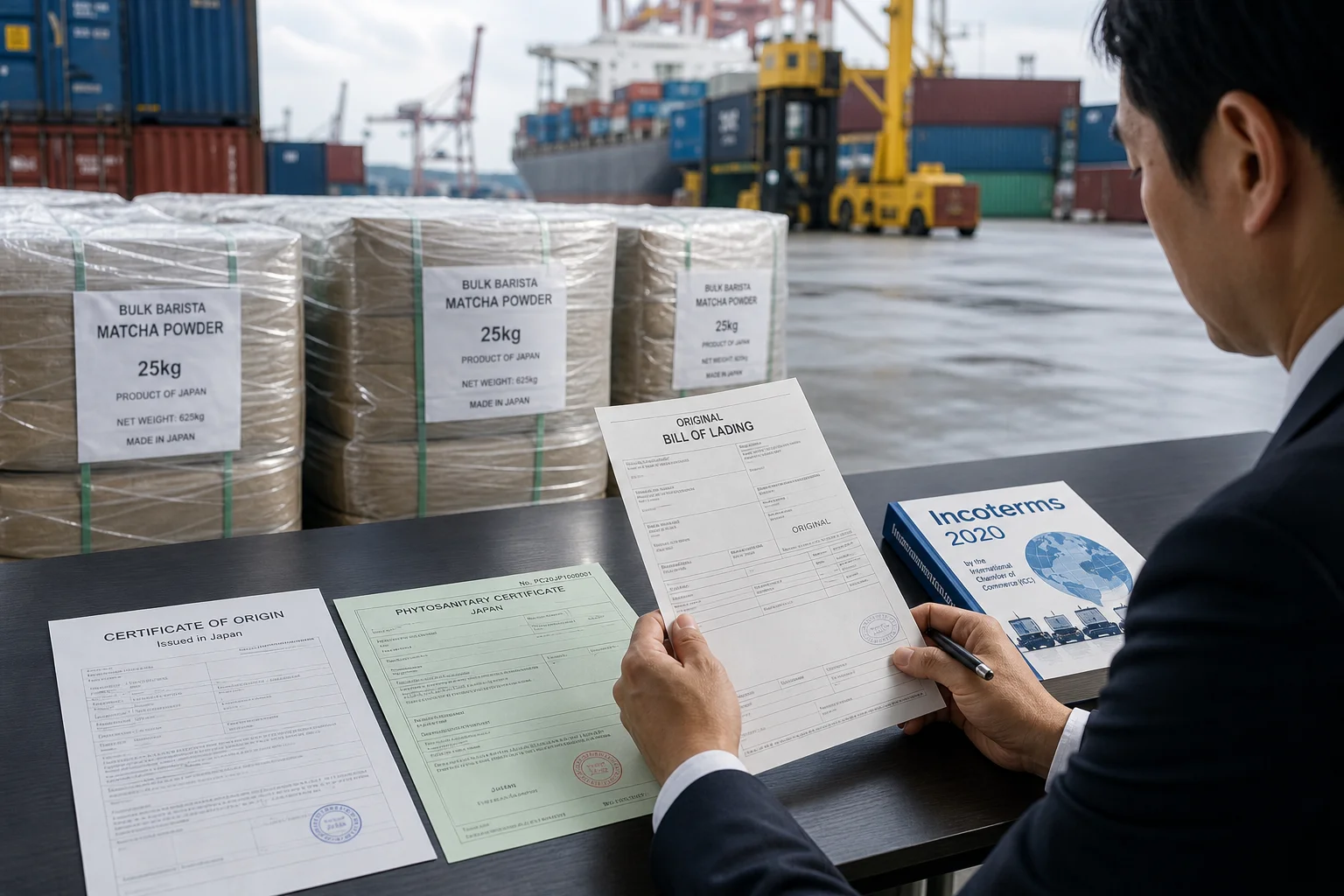
Demand draft copies of the Phytosanitary Certificate, Bill of Lading, and COA 7 days before ocean vessel departure.
Execute Receiving Inspection
Follow our standardized matcha cold chain and counter storage handling SOP upon pallet arrival at your warehouse facility.
Conclusion: Strategic Terms Protect Supply Chain Continuity
A world-class green tea program requires contractual excellence long before powder reaches the cafe bar. By avoiding the pitfalls of unmonitored CIF shipping and selecting terms aligned with your operational maturity—whether full-transparency FOB or frictionless DDP door-delivery—purchasing directors safeguard three vital assets:
- Margin Predictability: Eliminate unexpected port surcharges, tariff misclassifications, and demurrage penalties.
- Pristine Product Vibrancy: Ensure cargo travels under certified thermal protection, preserving delicate chlorophyll and L-theanine.
- Continuous Store Replenishment: Prevent customs delays and quarantine seizures, keeping franchise stores fully stocked for seasonal menu rotations and high-volume delivery operations.
Partnering with vertically integrated bulk manufacturers who provide transparent DDP logistics, verified organic certifications, and nitrogen-flushed multi-layer barrier packaging gives your brand the competitive foundation needed to scale globally.
Incoterms & Matcha Import Logistics FAQ
What is the safest Incoterm for a growing beverage chain importing bulk matcha for the first time?
DDP (Delivered Duty Paid) is the safest Incoterm for growing chains and first-time importers because the supplier absorbs all shipping, customs clearance, import tariff, and inland transport liabilities, guaranteeing 100% total landed cost certainty directly to your warehouse door.
Why is CIF considered a high-risk Incoterm for importing heat-sensitive matcha powder?
Under CIF, cargo risk transfers to the buyer the moment goods cross the origin ship's rail, meaning ocean transit thermal damage in hot dry containers (45°C+) falls on the buyer, while seller-appointed freight forwarders frequently extort buyers with inflated destination port surcharges (CISF/DTHC) before releasing cargo.
When should an enterprise tea importer choose FOB over DDP terms?
FOB (Free On Board) is ideal for large-scale enterprise buyers purchasing full container loads (FCL, 10t+) who maintain contracted ocean freight rates and preferred cold-chain reefer carriers, providing complete transparency and control over ocean shipping costs and transit routing.
What customs documentation is strictly mandatory for importing commercial bulk matcha?
Commercial bulk matcha customs clearance requires the commercial invoice, packing list, ocean bill of lading (B/L), official government Phytosanitary Certificate, Certificate of Origin (CO/Form E/RCEP), and third-party ISO-accredited multi-residue pesticide test reports.
How should ocean temperature controls be specified in a bulk matcha contract?
Contracts should mandate either temperature-controlled Reefer shipping set between 10°C and 15°C for summer ocean transit, or at minimum, full-coverage multi-layer thermal container foil liners inside dry containers to prevent equatorial ambient temperatures (45°C to 50°C) from degrading green chlorophyll.
What HS Code should be used when importing bulk green tea matcha powder?
Bulk green tea matcha powder is universally classified under Harmonized System (HS) Code 0902.10 (green tea unfermented in packages <= 3kg) or HS Code 0902.20 (green tea unfermented in bulk packages > 3kg), depending on primary packaging weight.
Source Factory-Direct Bulk Matcha with Guaranteed DDP Terms
AMULYN specializes in seamless global export logistics for multi-unit beverage chains and food manufacturers. We offer fully transparent FOB, CIF, and door-to-door DDP pricing with complete customs clearance, official phytosanitary documentation, and thermal container protection to ensure your matcha arrives factory-fresh with zero surprise port fees.
Request Global Landed Cost Quotation


