


















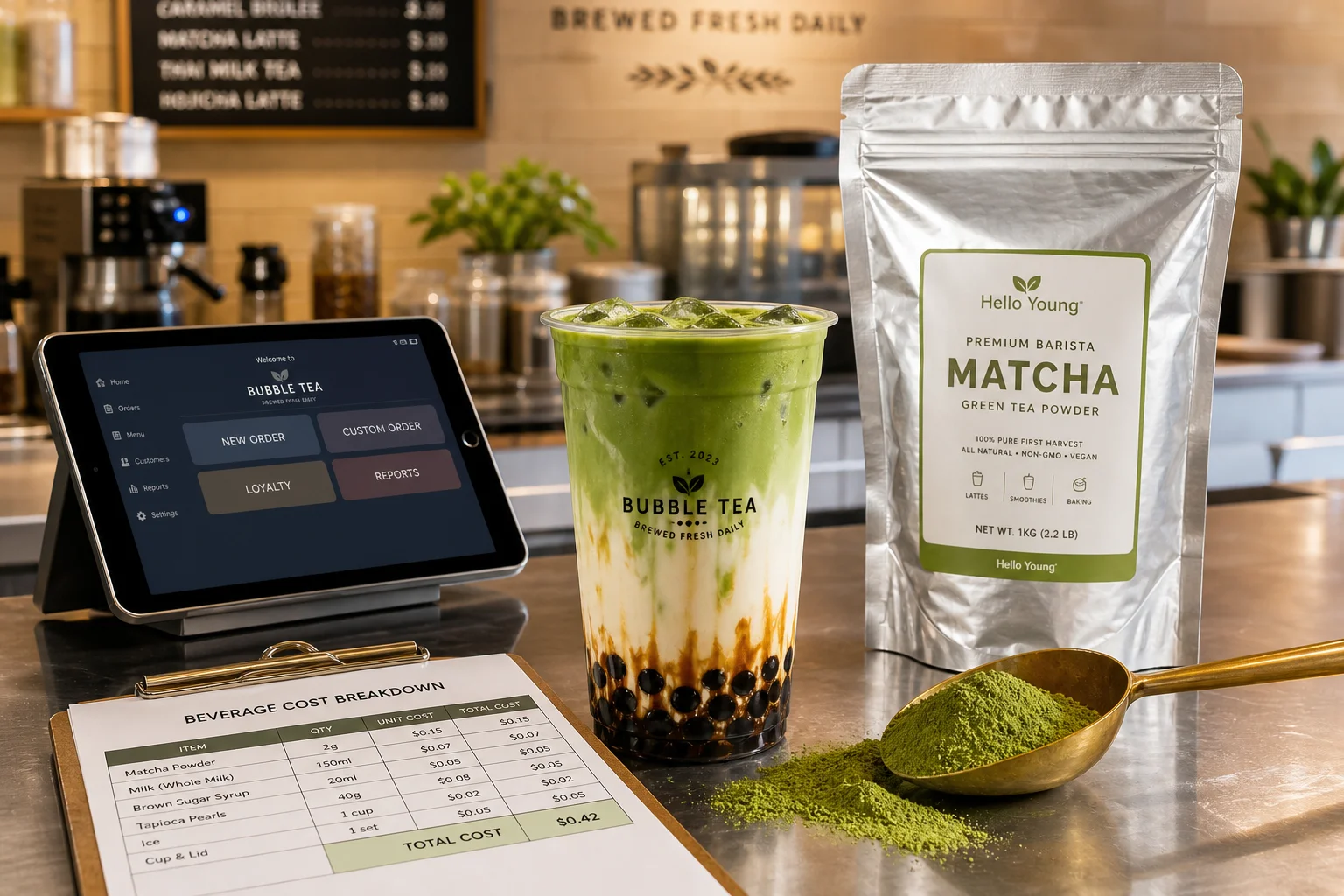
In the competitive bubble tea and specialty beverage industry, matcha drinks consistently rank among the top three highest-revenue categories. Yet behind the cash register, many independent boba shop owners and café beverage directors struggle with a critical operational dilemma: Why are their matcha beverage profit margins falling below expectations?
The root cause usually stems from two common procurement mistakes: either buying low-grade culinary powder that turns dull yellow-brown and drives customer churn, or overpaying for expensive retail-tinned ceremonial matcha ($100+/kg) that inflates food costs without cutting through sweet milk bases.
1. The Complete Boba Shop COGS Equation
Calculating your true drink cost requires accounting for all beverage elements, custom packaging, and unavoidable bar waste.
Many shop operators mistakenly calculate only the powder and milk cost, ignoring cups, sealing films, jumbo straws, and daily prep shrinkage—a blind spot that can erode net profits by 8% to 12% annually.
2. Wholesale Matcha Grade vs. Portion Cost Matrix
Choosing the right commercial grade balances vibrant visual appeal, bold flavor retention, and disciplined food cost controls.
Culinary / Baking Grade C
- Bulk Price: $15 – $25 / kg ($0.015–$0.025/g).
- Portion Cost (4g): $0.06 – $0.10 per cup.
- Visual & Taste: Dull olive-yellow; high astringency and bitter bite.
- Best Application: Baked goods, ice cream bases, pre-mixed milk teas.
Pure Ceremonial Grade
- Bulk Price: $80 – $120+ / kg ($0.08–$0.12/g).
- Portion Cost (4g): $0.32 – $0.48 per cup.
- Visual & Taste: Deep emerald; subtle sweet umami easily overpowered by syrup.
- Best Application: Traditional whisked water bowls (Usucha) and pure tea service.
3. Itemized Cost Breakdown: 16oz (480ml) Iced Matcha Boba Latte
Below is an empirical commercial benchmark for a premium 16oz iced beverage sold in modern specialty boba shops.
| Recipe Component | Standard Commercial Portion | Estimated Unit Cost Range | Contribution to Total COGS |
|---|---|---|---|
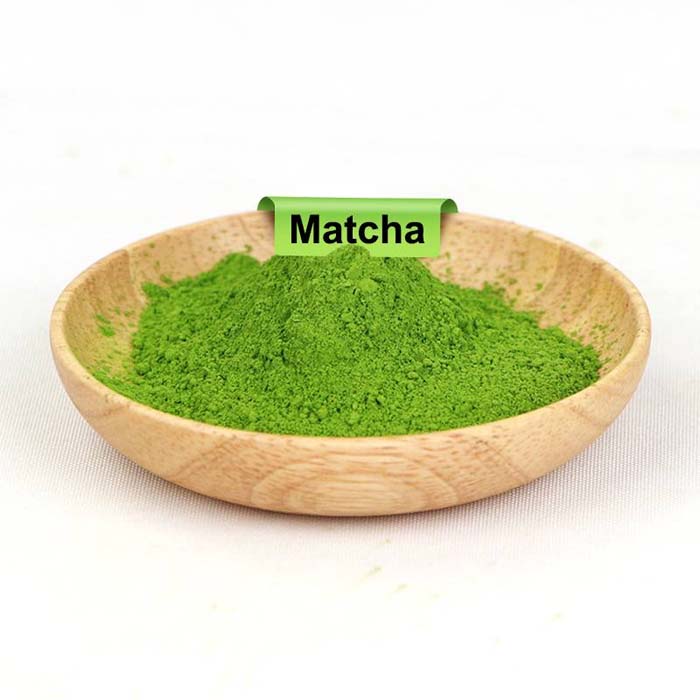
| Barista Matcha Powder | 4.0g (Sifted @ $45/kg wholesale) | $0.045 / g | $0.18 (18.4%) |
| Whole Milk / Barista Oat Milk | 180ml (6.0 fl oz) | $1.80–$2.70 / Liter | $0.32 – $0.48 (36.7%) |
| Cane Sugar / Fructose Syrup | 20ml (1 pump @ 65° Brix) | $2.00 / Liter | $0.04 (4.1%) |
| Brown Sugar Tapioca Boba | 60g (Cooked portion) | $2.50 / kg raw boba | $0.12 – $0.16 (14.3%) |
| Custom Packaging Set | PP Cup + Sealing Film + Straw + Sleeve | $160–$220 / 1,000 sets | $0.16 – $0.22 (18.4%) |
| Spillage & Waste Variance (5%) | Bar spillage and prep variance | 5% of ingredient subtotal | $0.05 (5.1%) |
| TOTAL ESTIMATED COGS | 16oz Finished Beverage | Benchmark Food Cost | $0.87 – $1.13 |
4. 4 High-Impact Profit Levers for Boba Shop Operators
Implement these four battle-tested operational strategies to widen beverage margins without compromising guest satisfaction.
35%–45% Savings. Shift from 100g retail tins to 1kg or 5kg vacuum-sealed nitrogen foil bags directly from certified manufacturers.
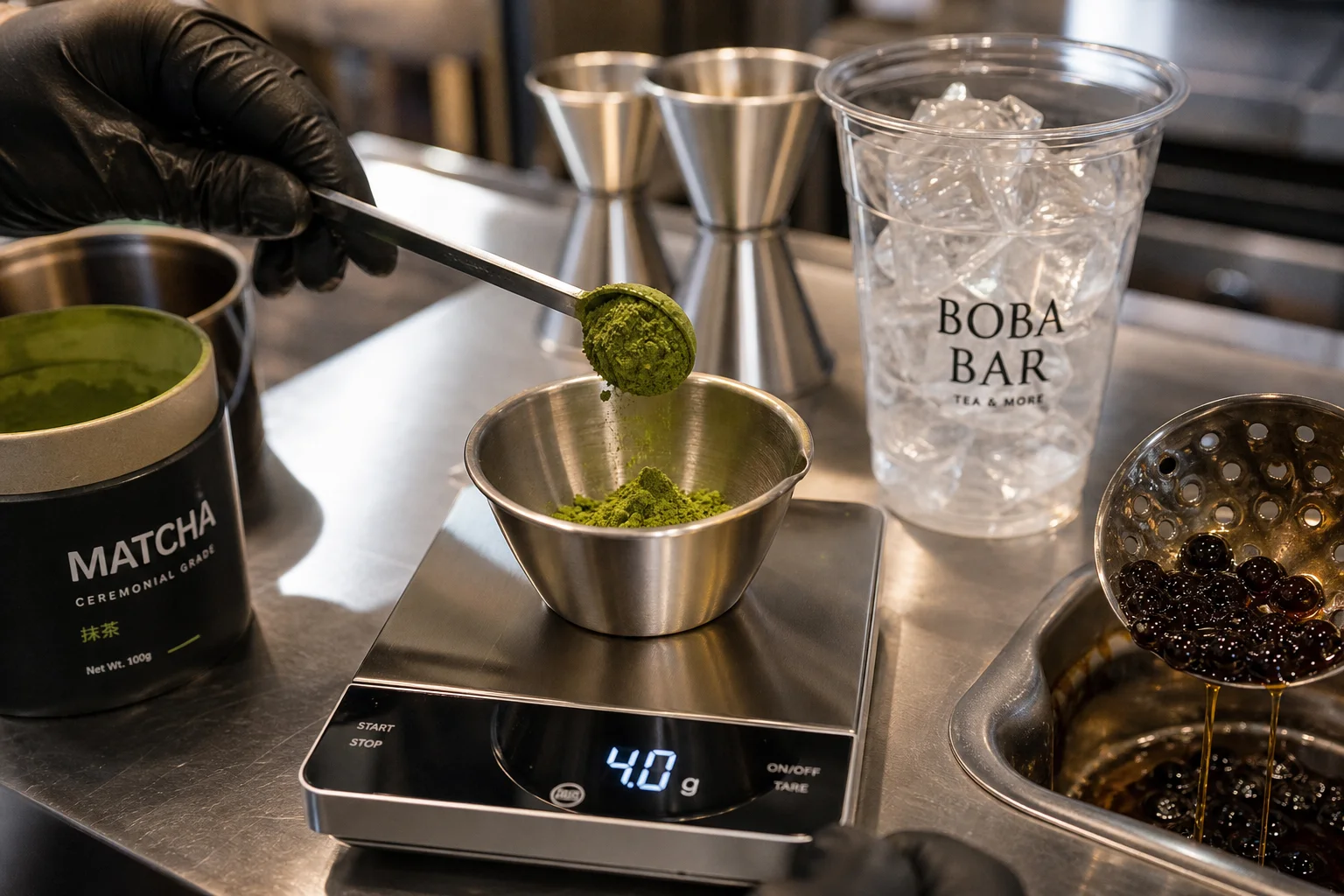
15-Second Assembly. Whisk daily 1:5 matcha concentrate batches before rush hours to eliminate scale delays and over-scoop shrinkage.
Protect Color & Flavor. Store bulk tea powder in airtight opaque stainless steel containers in the walk-in cooler to prevent photo-oxidation.
Margin Expansion. Use layered pairings (e.g., Ube Matcha or Cheese Foam Matcha) to command $7.25+ retail prices on minimal topping costs.
5. Financial Benchmarking: Margin & Revenue Projection
Here is what standard commercial volume looks like over a 30-day operating cycle in a busy suburban boba store.
6. 4-Step Standardized Bar Workflow for Maximum Margin Control
Standardize speed and portion accuracy during peak rush hours with this streamlined line assembly.
Prep batch base
Whisk 100g barista matcha with 500ml 75°C water daily; chill in a squeeze dispenser.
Portion boba & syrup
Scoop 1 standardized ladle of warm boba (60g) and dispense 20ml syrup into the cup.
Add ice & milk
Fill cup 70% with ice and pour 180ml whole or barista oat milk over the base.
Pour 25ml matcha shot
Dispense 25ml chilled matcha concentrate over ice for a razor-sharp green floating crown.
Conclusion: Strategic Sourcing Fuels Beverage Profitability
Mastering your matcha cost per cup transforms your green tea category from an unpredictable expense into a high-margin revenue anchor:
- Audit your full COGS: Always include packaging, toppings, and a 5% spillage buffer in your recipe cost model.
- Lock in Barista Grade A: Secure bulk powders at $35–$55/kg to guarantee vivid green visuals without overpaying for ceremonial grades.
- Batch for operational speed: Eliminate bar scale bottlenecks and inventory shrinkage with standardized prep SOPs.
By partnering directly with certified primary tea processing mills, boba chains and independent owners secure consistent lot quality, verified COAs, and industry-leading wholesale pricing.
Matcha Cost Per Cup FAQ
What is the average cost of matcha powder per 16oz cup in a boba shop?
When sourcing wholesale Cafe/Barista Grade A matcha at $35 to $55 per kilogram, a standard 4.0g serving costs approximately $0.14 to $0.22 per cup, providing vibrant electric green color and rich tea flavor through sweet milk bases.
What is the total Cost of Goods Sold (COGS) for an iced matcha boba latte?
A standard 16oz iced matcha boba latte carries an estimated total COGS of $0.87 to $1.13, including 4g barista matcha ($0.18), 180ml milk ($0.32–$0.48), 20ml syrup ($0.04), 60g tapioca boba ($0.12–$0.16), packaging ($0.16–$0.22), and a 5% waste variance ($0.05).
What profit margin should a boba shop target for specialty matcha drinks?
Boba tea shops typically target a gross profit margin between 78% and 84% on signature matcha beverages. Pricing a $1.00 COGS drink at $5.75 to $6.75 delivers healthy margins to comfortably cover labor, rent, and overhead expenses.
Why shouldn't boba shops use expensive ceremonial grade matcha for milk teas?
Ceremonial grade matcha costs $80 to $120+ per kg ($0.32–$0.48 per 4g dose) and features subtle, delicate umami notes that become completely masked by heavy milk fat and brown sugar syrups, inflating beverage costs without noticeable consumer benefit.
How does batching matcha concentrate reduce beverage waste and speed up service?
Pre-whisking a daily batch of chilled matcha concentrate (1:5 ratio with filtered water) cuts peak assembly time down to 15 seconds and eliminates barista over-dosing errors, preventing the 15% to 20% inventory shrinkage common with per-cup dry scooping.
How much can boba shops save by purchasing bulk 1kg or 5kg foil packs instead of 100g tins?
Direct factory bulk procurement in 1kg or 5kg vacuum-sealed aluminum foil bags reduces unit purchase costs by 35% to 45% compared to retail tin packaging, translating directly to thousands of dollars in annual inventory savings.
Source Wholesale Barista Matcha & Cut Your Drink COGS
AMULYN supplies certified organic and barista-grade shade-grown matcha powders directly from primary tea plantations in 1kg, 5kg, and 25kg bulk packaging, delivering vivid electric green color, consistent lot-to-lot flavor, and unbeatable direct-factory pricing.
Request Wholesale Price Sheet


