
















For millions of daily tea drinkers, the vibrant green color and meditative ritual of whisking a matcha latte represent the pinnacle of home wellness. Yet for individuals sensitive to caffeine, pregnant mothers, or those crafting a calming afternoon beverage, standard coffeehouse matcha drinks pose a dilemma: A standard 2.5g serving contains 50mg to 70mg of caffeine—nearly equal to an espresso shot.
Because authentic matcha consists of 100% whole stone-ground green tea leaves, "decaffeinated matcha" is exceedingly rare and often chemically stripped. Fortunately, by applying food science and culinary ratio adjustments, you can easily craft a delicious, velvety, and genuinely low-caffeine matcha latte (18mg–25mg) right in your home kitchen.
1. The Caffeine Hierarchy: Standard vs. Caffeine-Light Matcha
Comparing caffeine dosages per serving reveals why adjusting your home scoop weight makes all the difference for afternoon comfort.
Standard Commercial Latte
- Matcha Powder: 2.5g – 3.0g full scoop.
- Caffeine Content: 55mg – 75mg (High).
- Sensory Profile: Intense grassy astringency and heavy umami punch.
- Best Timing: Early morning focus (7:00 AM – 10:30 AM).
Balanced Home Ritual
- Matcha Powder: 1.5g standard home scoop.
- Caffeine Content: 30mg – 40mg (Moderate).
- Sensory Profile: Balanced green tea body with smooth sweetness.
- Best Timing: Midday study or work session (11:00 AM – 2:00 PM).
Precision Caffeine-Light Latte
- Matcha Powder: 1.0g micro-dose (or 50/50 blend).
- Caffeine Content: 18mg – 25mg (Low / Gentle).
- Sensory Profile: Silky pastel green, delicate vegetal notes, zero bitterness.
- Best Timing: Relaxing afternoon or evening wind-down (2:00 PM – 7:30 PM).
2. 4 Proven Methods to Craft a Low-Caffeine Matcha Latte at Home
Select the formulation technique that best matches your daily taste preferences and pantry ingredients.
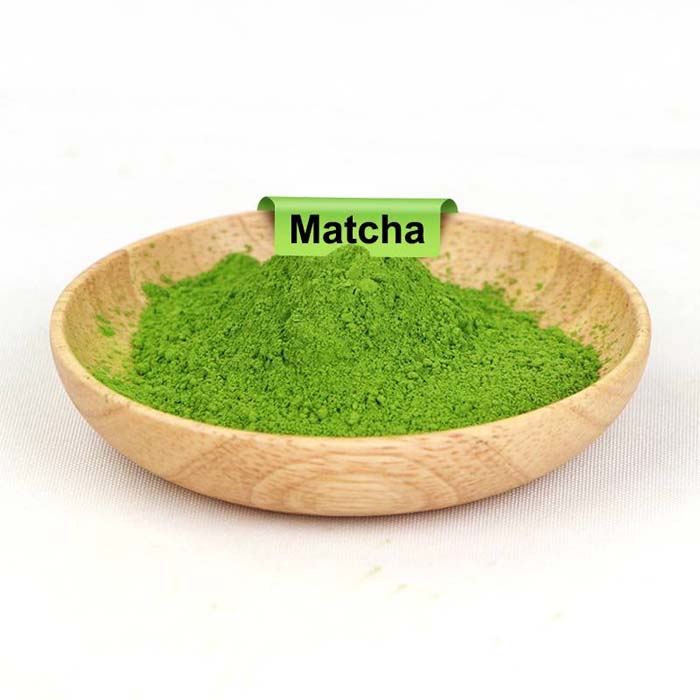
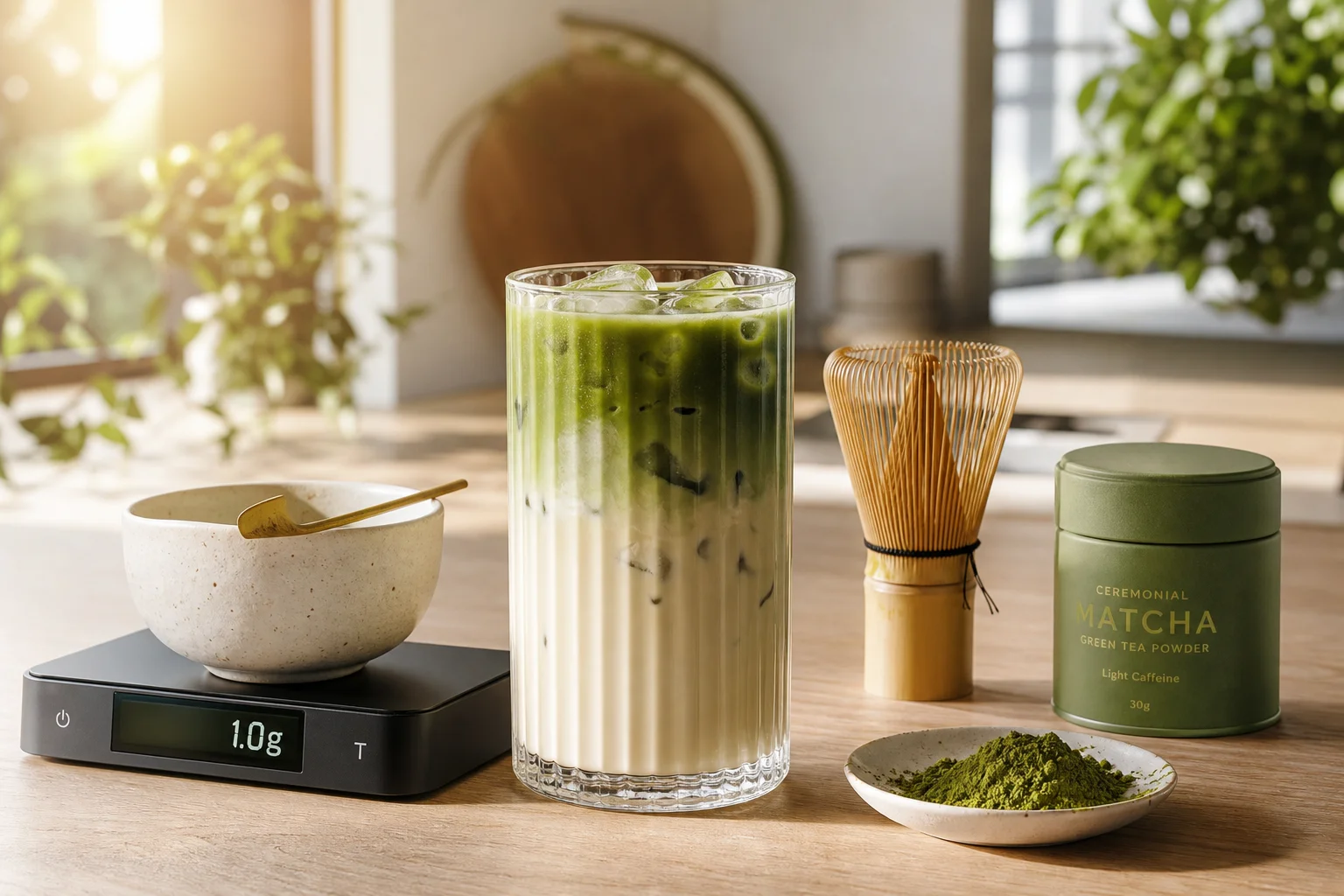
The Scale-Calibrated Method. Weigh exactly 1.0g of ceremonial matcha. Whisk in 40ml of 75°C water and blend into 180ml rich barista oat milk. Delivers pristine chlorophyll color with only ~20mg caffeine.
Functional Superfood Fusion. Whisk 1.0g matcha with 1.0g pure purple yam (ube) or lion's mane powder. Halves the caffeine while adding vanilla-nutty sweetness and cognitive adaptogens.
Autumn Leaf Sourcing. Source culinary or autumn-harvest matcha produced from mature sun-ripened leaves, which naturally contain 20%–30% less baseline caffeine than shaded spring buds.
70°C Thermal Buffer. Whisking with cooler filtered water (70°C–75°C) limits the thermal extraction rate of bitter catechins, resulting in a remarkably smooth and stomach-friendly infusion.
3. The Golden Recipe Matrix: Dialing In Ratios at Home
Use these standardized home kitchen ratios to maintain rich, velvety mouthfeel without feeling watery.
| Recipe Style | Matcha / Botanical Grams | Water Volume & Temp | Milk Base (180ml) | Estimated Caffeine |
|---|---|---|---|---|
| Iced Micro-Dose Matcha Latte | 1.0g Ceremonial Matcha (Sifted) | 40ml @ 75°C (167°F) | Chilled Barista Oat Milk + Ice | ~18mg – 22mg |
| Ube-Matcha 50/50 Cloud Latte | 1.0g Matcha + 1.5g Pure Ube Powder | 50ml @ 75°C (167°F) | Warm or Iced Coconut Milk | ~18mg – 22mg |
| Vanilla Cashew Evening Latte | 1.0g Matcha + 0.5g Vanilla Extract | 40ml @ 70°C (158°F) | Steamed Creamy Cashew Milk | ~18mg – 22mg |
| Adaptogenic Lion's Mane Matcha | 1.0g Matcha + 1.0g Mushroom Extract | 50ml @ 80°C (175°F) | Steamed Almond / Oat Milk | ~20mg – 25mg |
4. Why L-Theanine Ensures Jitter-Free Energy Even at Low Dosages
The unique neurological synergy between L-theanine and caffeine makes even small amounts of matcha extraordinarily effective.
5. 4-Step Standardized Preparation Method for Home Baristas
Follow this 60-second home workflow using either a traditional bamboo whisk (chasen) or an electric milk frother.
Weigh & sift 1.0g
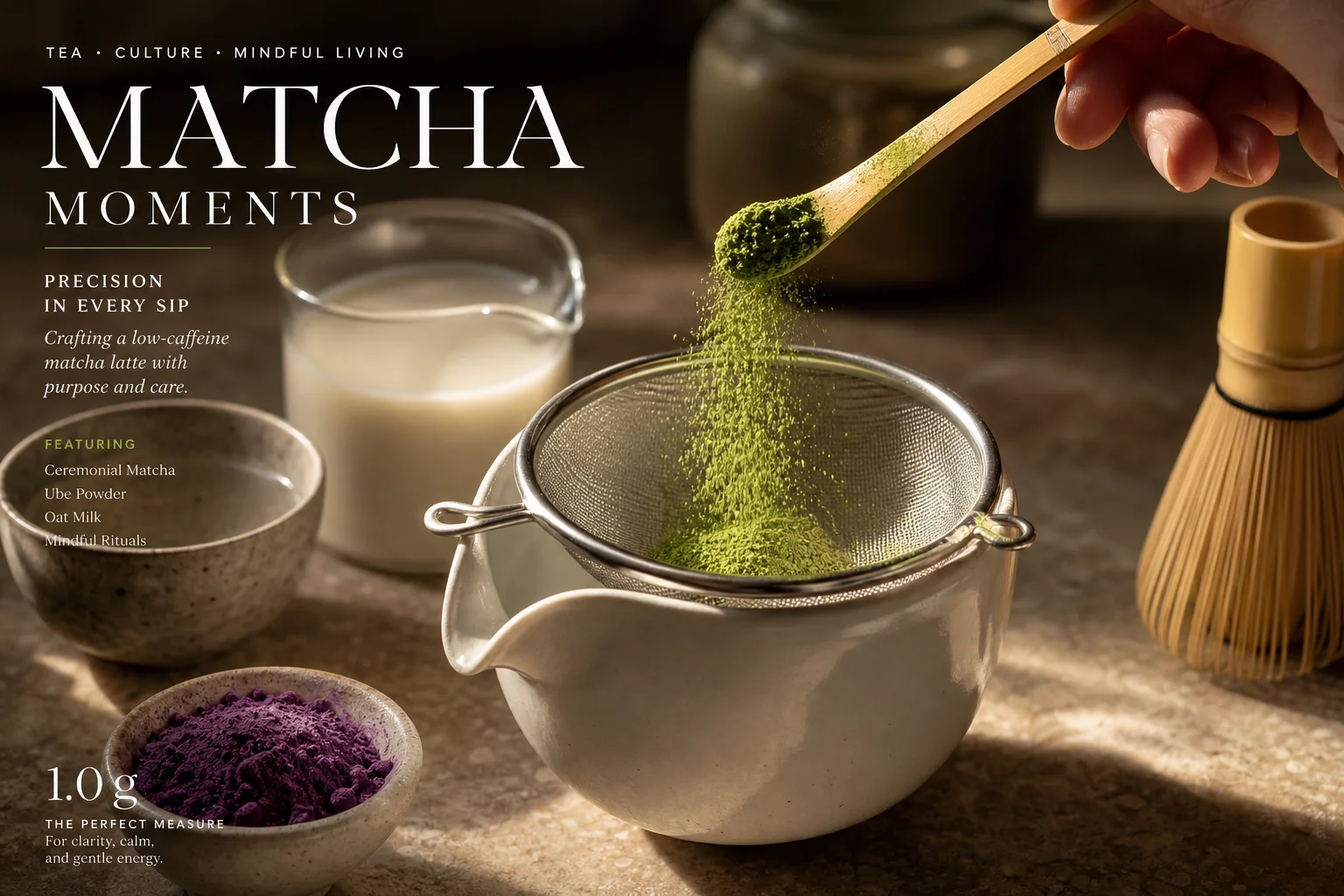
Weigh exactly 1.0g of ceremonial matcha on a mini scale and sift through a fine mesh strainer.
Add 75°C water
Pour 40ml of 70°C–75°C filtered water into your spouted chawan or frothing cup.
Whisk velvety shot
Whisk briskly in a W-pattern with a chasen or electric frother for 15 seconds until fine microfoam forms.
Pour over rich milk
Pour over 180ml of cold iced or steamed textured barista oat milk for a silky, gentle latte.
When halving matcha powder, always pair with a high-protein or high-lipid plant milk (like Oatly Barista or Minor Figures). The natural oat lipids coat the palate, mimicking the heavy body of a 3g cafe latte.
Conclusion: Personalized Wellness in Every Cup
Enjoying a matcha latte at home does not have to mean accepting overstimulation or sleep disruption. By mastering micro-dosing and smart botanical blending, you gain complete control over your daily wellness routine:
- Measured freedom: A dialed-in 18mg–25mg caffeine level suitable for peaceful afternoons.
- Uncompromised beauty: Luminous jade green color and soothing L-theanine alpha-wave clarity.
- Versatile culinary pairing: Seamless integration with superfoods like ube, vanilla, and oat milk.
Whether perfecting your morning cup or developing a low-caffeine afternoon beverage line for retail, authentic shade-grown matcha powder provides the ideal foundation.
Low-Caffeine Matcha Latte FAQ
How can you make a matcha latte at home with significantly less caffeine?
You can reduce caffeine at home through four proven methods: using a precision 1.0g micro-dose instead of 2.5g, blending matcha 50/50 with botanical powders like ube or mushroom extracts, choosing late-harvest autumn tencha, or pairing with high-lipid oat milk to buffer absorption.
How much caffeine is in a micro-dosed homemade matcha latte?
A precision micro-dosed matcha latte prepared with 1.0g of ceremonial matcha powder yields approximately 18mg to 25mg of caffeine—providing gentle mental focus while remaining roughly 60% to 70% lower in caffeine than a standard coffeehouse matcha latte.
Does reducing matcha powder make the homemade latte taste watery?
Not if you use a high-lipid, barista-grade plant milk such as oat milk, cashew milk, or coconut cream. The natural fats and proteins in these milks compensate for the reduced powder mass, preserving a creamy, rich mouthfeel and vibrant green aroma.
What is the 50/50 superfood blend method for low-caffeine matcha lattes?
The 50/50 method combines 1.0g of pure ceremonial matcha with 1.0g to 1.5g of caffeine-free functional powders—such as purple yam (ube), lion's mane mushroom, or roasted chicory root—halving total caffeine while delivering exciting dual-benefit wellness nutrition.
Does L-theanine in low-caffeine matcha still provide clean energy without jitters?
Yes. Even at a 1.0g dosage, premium shade-grown matcha delivers 10mg to 18mg of natural L-theanine. This amino acid crosses the blood-brain barrier to stimulate alpha brain waves, creating sustained calm alertness without energy spikes or crashes.
How does water temperature affect the extraction of caffeine in homemade matcha?
Whisking matcha with cooler water (70°C to 75°C / 158°F to 167°F) slows down the perceived astringency and caffeine release rate compared to boiling water, resulting in a smoother, sweeter, and more digestive-friendly cup.
Source Certified Organic Matcha & Botanical Blends
From first-harvest ceremonial matcha and shade-grown barista grades to pure purple yam (ube) and functional mushroom powders, AMULYN supports global brands, roasteries, and wellness companies with dependable bulk supply, low MOQs, and complete technical support.
Request Product Samples


