
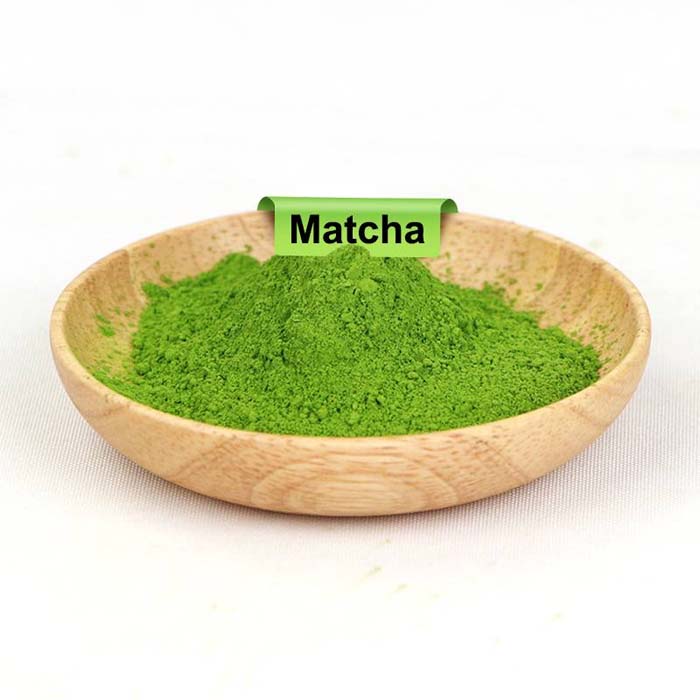





















In high-volume bubble tea and specialty beverage franchises, beverage quality is frequently lost not in the tea gardens of Japan or China, but across the final 50 feet of the store operations pipeline. A purchasing team can evaluate and onboard top-tier suppliers using a formal matcha vendor scorecard evaluation framework, yet retail customers may still receive dull, olive-brown drinks with harsh astringency. The culprit is almost always uncontrolled temperature exposure, improper package unsealing, and ambient oxidation at the store counter.
Matcha is a biologically active, micro-milled green tea powder with an immense surface-area-to-volume ratio ($<15\mu\text{m}$ particle size). Because of this microscopic fineness, its delicate chlorophyll pigments, L-theanine amino acids, and aromatic volatile esters are hyper-sensitive to ambient heat, light, and humidity. When exposed to room temperatures above 25°C, chlorophyll rapidly converts into pheophytin, turning electric jade green into an unappetizing murky brown within days.
To eliminate product loss, protect gross margins established in your matcha cost per cup calculation guide, and maintain flawless color consistency across every drink, chain operations must implement an end-to-end Cold Chain & Counter Storage Standard Operating Procedure (SOP) from warehouse delivery to active drink assembly.
1. The 3 Physical Drivers of Matcha Degradation
Understanding the biophysical breakdown of bulk matcha powder wholesale enables store managers and franchise trainers to enforce handling protocols with scientific clarity.
Pheophytin Conversion. Ambient heat ($>22^\circ\text{C}$) accelerates enzymatic and non-enzymatic degradation, causing the magnesium ion inside chlorophyll to detach, transforming vibrant green into dull olive-brown.
Light-Induced Fading. Direct sunlight and high-kelvin overhead LED bar spotlights trigger photo-oxidation, destroying aromatic terpenes and inducing a stale, hay-like cardboard flavor.
Water Activity Spike. Relative humidity ($>50\%\,\text{RH}$) pushes internal moisture above $5.0\%$ and water activity ($a_w$) above $0.40$, causing electrostatic clumping that clogs sifters and ruins drink texture.
Catechin Polymerization. Atmospheric oxygen oxidizes delicate EGCG catechins into dark, bitter tannins, stripping away the natural sweet umami profile of shade-grown tea leaves.
Example: A 4°C bag opened in a 25°C / 60% RH cafe draws immediate microscopic water droplet formation on cold powder particles within 30 seconds.
2. Comprehensive Cold-Chain & Counter Storage Matrix
This master parameter table details the exact environmental thresholds, packaging barriers, and maximum shelf-life limits for each operational stage.
| Operational Stage | Target Temperature | Target Humidity | Packaging & Barrier Type | Max Stable Shelf Life |
|---|---|---|---|---|
| Central Warehouse Freezer | -18°C to -20°C (-0.4°F to -4°F) | < 50% RH (Dry Freeze) | Nitrogen-Flushed Multi-Layer Aluminum Foil (PET/AL/PE) | 12 to 24 Months (Zero Quality Drift) |
| Reefer Transit & Hub Depot | 0°C to 4°C (32°F to 39°F) | < 55% RH | Sealed Outer Corrugated Master Carton + Inner Foil | 6 to 12 Months |
| Store Staging & Thawing | 20°C to 22°C (68°F to 72°F) | < 45% RH | Factory-Sealed Foil Bag (Mandatory 4–6h Resting Period) | Stage Duration: 4 to 12 Hours |
| In-Service Bar Dosing Canister | 20°C to 22°C Ambient (or 4°C Drawer) | < 45% RH | Opaque Stainless Steel with Double Silicone Gasket | 7 to 14 Days (Small Batch Dosing) |
| Pre-Whisked 1:5 Concentrate | 0°C to 4°C (Ice Bath / Under-Counter) | N/A (Liquid Solution) | BPA-Free Squeeze Bottle with Date/Time Discard Label | Strict 4-Hour Maximum Discard Limit |
3. The 4-Stage Store Handling Protocol
To integrate these specifications into your daily matcha station workflow and bar layout guide, train staff on these four mandatory handling phases.
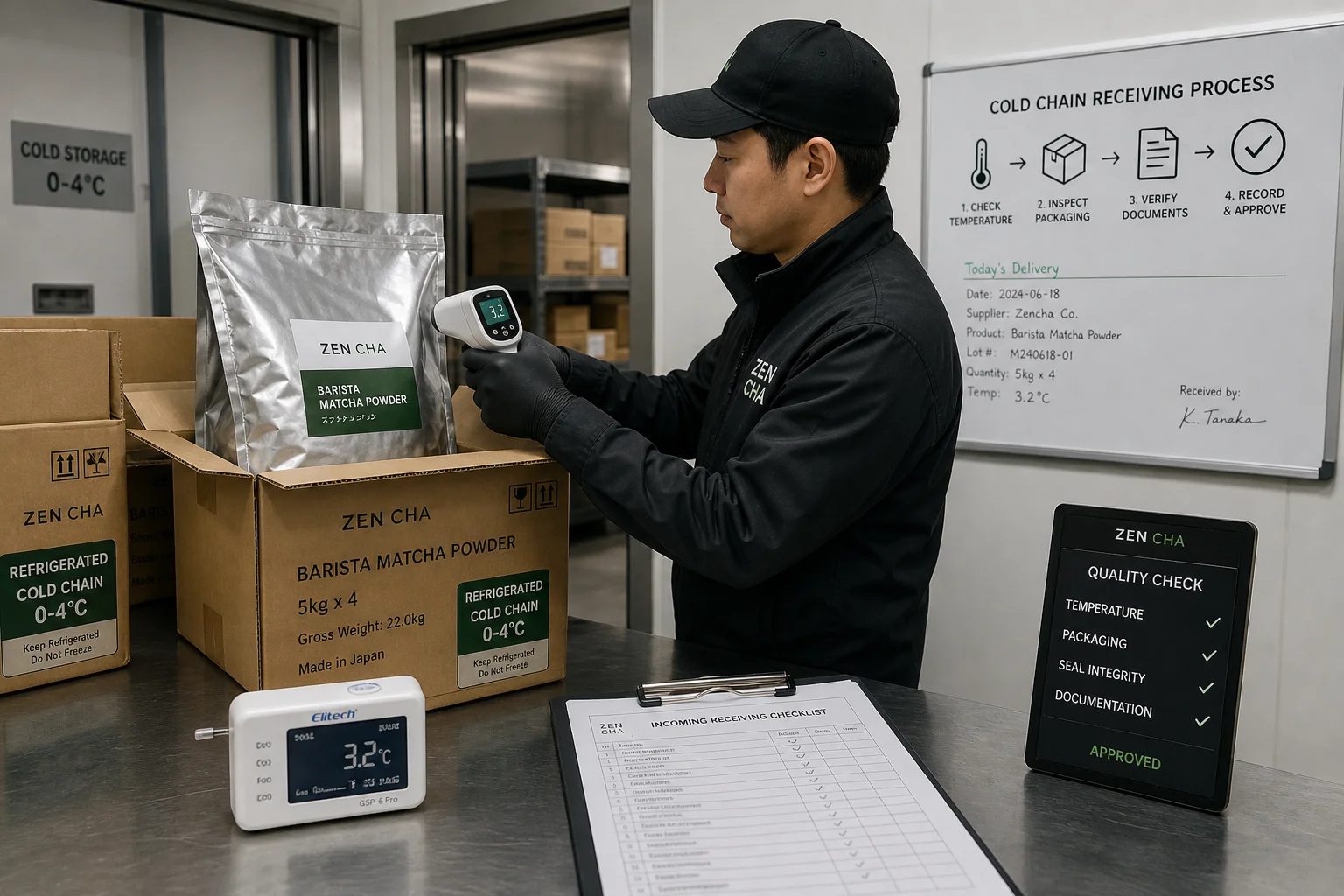
Stage 1: Receiving Log
- Inspect incoming master cartons for moisture breaches or thermal thawing.
- Point an infrared thermometer at the core foil bag; verify reading is ≤ 8°C.
- Immediately transfer unopened stock into the back-of-house walk-in refrigerator (0°C–4°C).
Stage 2: Tempering Rule
- Remove sealed 1kg/5kg bags from the fridge 4 to 6 hours before opening.
- Never cut cold foil bags open; allow internal powder to equalize with room temperature.
- Prevents irreversible moisture condensation and lump formation.
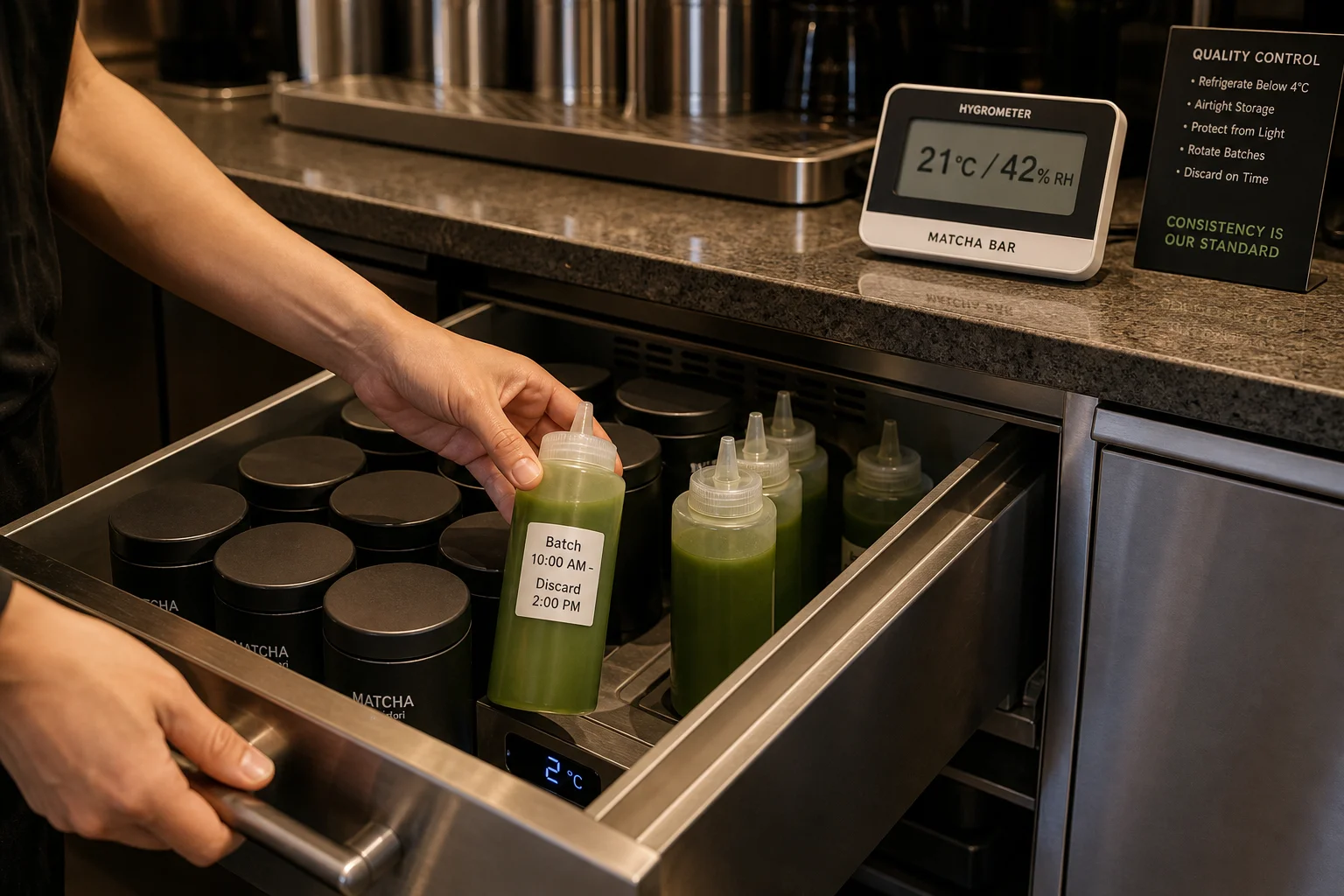
Stage 4: Liquid Discard
- For fast rush hours, prepare 1:5 chilled matcha concentrate in squeeze bottles.
- Affix a mandatory timestamp label: "Made: 10:00 AM | Discard: 2:00 PM".
- Store in 0°C–4°C ice baths; strictly discard unused liquid after 4 hours.
4. Troubleshooting Common In-Store Matcha Storage Errors
When franchise stores report customer complaints regarding color shifts or bitter flavor profiles, audit these four high-frequency operational errors.
5. 4-Step Routine for Store Quality Audits
Franchise area managers and quality control teams should execute this rapid audit checklist during weekly store visits.
Check Loggers
Verify walk-in cooler and reach-in freezer temperatures (0°C–4°C and -18°C) using calibrated digital loggers.
Inspect Seals
Examine active bar canisters and opened master bags for airtight silicone seals and hermetic clamp closures.
Verify Timestamps
Confirm that pre-whisked liquid concentrate bottles on the line display valid 4-hour expiration time labels.
Visual & Sifter Test
Perform a test sift of 4.0g powder; verify electric jade green hue and effortless pass-through with zero moisture clumping.
Conclusion: Cold Chain Discipline Protects Beverage Brand Equity
A multi-unit green tea program is only as strong as its weakest temperature checkpoint. By aligning store receiving, ambient tempering, and active counter staging with strict biophysical standards, beverage chains secure three vital operational benefits:
- Zero Aesthetic Color Drift: Ensure every signature Ube Coconut Matcha and iced latte presents an electric emerald crown that drives social media engagement.
- Consistent Unit Economics: Prevent costly powder spoilage, clumping waste, and inventory write-offs, maximizing profitability across seasonal menu rotations.
- Superior Sensory Flavor: Preserve natural L-theanine sweetness and delicate vegetal umami, keeping customer satisfaction and repeat purchase rates consistently high.
Partnering with experienced bulk manufacturers who package under vacuum-nitrogen flush and maintain certified cold-chain logistics provides the upstream foundation your franchise needs to scale flawlessly.
Matcha Cold Chain & Storage FAQ
What is the optimal storage temperature for unopened bulk matcha powder?
Unopened nitrogen-flushed bulk matcha powder should be stored in deep freeze at -18°C to -20°C for long-term storage up to 12 to 24 months, or in refrigerated cold storage at 0°C to 4°C for up to 6 to 12 months to completely halt chlorophyll degradation and polyphenol oxidation.
Why is it dangerous to open chilled or frozen matcha bags immediately upon store delivery?
Opening a cold or frozen foil bag in a warm cafe environment causes instant dew-point condensation shock, where ambient moisture condenses onto the micro-fine powder within seconds, creating irreversible clumping, raising water activity, and accelerating enzymatic browning within 24 hours.
What is the mandatory tempering time required before opening cold matcha packaging?
Sealed bulk matcha bags must rest undisturbed at ambient room temperature (20°C to 22°C) in a dry, dark holding area for at least 4 to 6 hours for refrigerated bags, or 12 to 24 hours for deep-frozen bags, ensuring the internal powder reaches room temperature before unsealing.
How should opened matcha powder be stored on the active bubble tea preparation bar?
In-service matcha should be portioned in small daily batches (150g to 300g) inside opaque, airtight stainless steel canisters with food-grade silicone gaskets, kept strictly away from steam wands, water boiler vents, and direct heat lamps.
How long can pre-whisked 1:5 matcha concentrate be safely kept on the bar during peak rush?
Pre-whisked 1:5 liquid matcha concentrate stored in refrigerated squeeze bottles or ice-water baths at 0°C to 4°C has a strict maximum shelf life of 4 hours, after which dissolved catechins polymerize, causing brown discoloration, grassy off-notes, and heavy bitter astringency.
What packaging material provides the best barrier protection for commercial matcha storage?
Commercial bulk matcha requires multi-layer food-grade aluminum foil barrier pouches (PET/AL/PE) flushed with food-grade nitrogen gas (residual oxygen <0.5%) to provide 100% light opacity, zero vapor permeability, and total protection against atmospheric oxygen.
Source Factory-Fresh Nitrogen-Flushed Wholesale Matcha
AMULYN provides certified organic and barista-grade bulk matcha powders packed in heavy-duty multi-layer aluminum foil pouches with vacuum nitrogen flushing. Engineered for multi-unit beverage chains, our cold-chain ready packaging protects volatile aromas, guarantees electric green vibrancy, and delivers predictable, high-margin quality across every shipment.
Request Bulk Packaging Specification Sheet


