





















In the specialty coffee world, baristas can distinguish between a washed Ethiopian Yirgacheffe and a natural Processed Brazilian bean blindfolded. They understand that origin, processing, and harvest time dictate flavor. Yet, in the rapidly expanding matcha market, a surprising number of café owners treat "matcha" as a monolithic commodity. They buy a single bulk bag and use it for everything from $7 ceremonial lattes to $4 baked goods.
This one-size-fits-all approach is leaving money on the table. It either inflates costs by using premium tea in recipes where its nuance is lost, or it damages brand reputation by serving bitter, astringent tea to purists. The key to unlocking profitability and quality lies in understanding the difference between First Flush (Ichibancha) and Second Flush (Nibancha).
This guide will dissect the agricultural science behind these harvests, explain their distinct flavor profiles, and provide a strategic framework for building a tiered matcha menu that maximizes both margin and customer satisfaction.
1. The Agricultural Clock: What Defines a "Flush"?
Matcha is made from Tencha, shade-grown green tea. The term "flush" refers to the specific harvesting window in the spring and summer. The difference between the first and second flush is not just about timing; it is about the biochemical composition of the leaf.
First Flush (Ichibancha): The Spring Harvest
Harvested between late April and early May, the First Flush represents the culmination of months of winter dormancy. During this period, the tea plant (Camellia sinensis) stores nutrients in its roots. When spring arrives, these nutrients surge into the new buds.
Crucially, these plants are shaded for 20-30 days before harvest. This stress response forces the plant to overproduce chlorophyll (for vibrant green color) and L-Theanine (an amino acid responsible for umami and calm energy). Because the leaves are young and tender, they have low levels of catechins (tannins), which cause bitterness.
Second Flush (Nibancha): The Summer Harvest
Harvested in June and July, the Second Flush grows after the plant has already expended significant energy on the first harvest. The days are longer, hotter, and sunnier. While some shading may still occur, it is often shorter in duration.
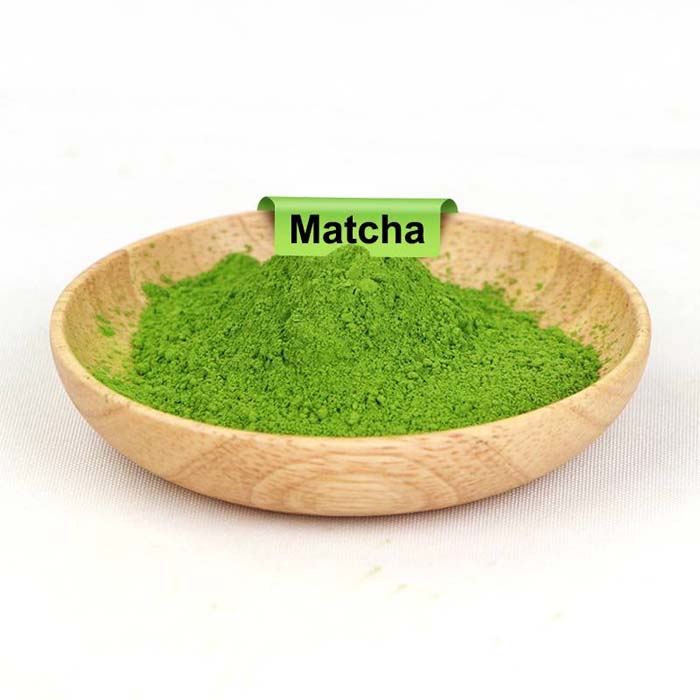
Exposure to more sunlight triggers photosynthesis that converts L-Theanine into catechins. Catechins are antioxidants, but they are also bitter and astringent. The leaves are thicker, tougher, and have a higher fiber content. The resulting powder is a lighter, yellowish-green and has a robust, grassy, and slightly bitter profile.
2. Head-to-Head: Sensory & Chemical Profile
| Feature | First Flush (Ichibancha) | Second Flush (Nibancha) |
|---|---|---|
| Harvest Time | Late April - Early May | June - July |
| Color | Vibrant, Electric Emerald Green | Duller, Yellowish-Green or Olive |
| Aroma | Sweet, Marine, Fresh Grass (Norii) | Roasted, Earthy, Strong Vegetal |
| Flavor Profile | High Umami, Sweet, Low Bitterness | Robust, Astringent, Bold, Bitter |
| L-Theanine | Very High (Calm Energy) | Moderate to Low |
| Catechins | Low | High (Strong Antioxidant Kick) |
| Texture | Silky, Fine Micro-powder | Slightly Grittier, Coarser |
| Cost | Premium ($$$) | Economy ($) |
3. The Pyramid Menu Strategy
Using First Flush for every drink is financially unsustainable. Using Second Flush for pure tea drinks will disappoint customers. The solution is a Tiered Menu Architecture. This approach matches the grade of tea to the complexity of the recipe.
Tier 1: The Purist Experience (First Flush)
Products: Traditional Usucha (thin tea), Koicha (thick tea), Cold Brew Pure Matcha.
Strategy: This is your brand builder. Customers drinking pure matcha are tasting the tea itself. Any bitterness here is perceived as a defect. Use only high-grade First Flush. The high L-Theanine content provides the "calm alertness" that health-conscious consumers seek. Price this at a premium to reflect the cost of goods.
Tier 2: The Crowd Pleaser (The Blend)
Products: Honey Matcha Latte, Oat Milk Matcha, Iced Shaken Matcha.
Strategy: In a latte, the sweetness of the milk and any added syrups masks the subtle umami of First Flush, but the bitterness of Second Flush can still cut through. A blend of 70% First Flush and 30% Second Flush creates a robust flavor that stands up to milk without being overly bitter, while keeping costs lower than 100% First Flush. The vibrant green color from the First Flush portion ensures the drink looks Instagram-worthy.
Tier 3: The Workhorse (Second Flush)
Products: Matcha Croissants, Cookies, Smoothies, Frappes.
Strategy: When matcha is baked or blended with fruits (like banana or mango), the delicate floral notes of First Flush are completely destroyed. However, the bold, grassy flavor of Second Flush holds up well against strong flavors like chocolate or dairy. Using expensive First Flush here is a waste of money. Second Flush provides the necessary color and antioxidant marketing claim at a fraction of the cost.
4. Optimizing COGS: A Financial Case Study
Let’s look at the numbers. Assume the following wholesale costs (hypothetical averages):
- First Flush: $1.50 per gram
- Second Flush: $0.50 per gram
Scenario A: One-Size-Fits-All (Using First Flush for Everything)
If you use 2g of First Flush for a latte ($3.00 cost) and 5g for a smoothie ($7.50 cost), your margins are severely compressed. You are spending $7.50 on tea for a $6.00 smoothie.
Scenario B: Tiered Strategy
- Pure Tea (2g First Flush): $3.00 cost. Sold for $6.00. (Acceptable margin for premium product).
- Latte (2g Blend): 1.4g First + 0.6g Second = $2.40 cost. Sold for $5.50. (Better margin).
- Smoothie (5g Second Flush): $2.50 cost. Sold for $6.00. (Healthy margin).
By switching your culinary applications to Second Flush, you can reduce your overall matcha inventory cost by up to 40% without compromising the perceived quality of your flagship beverages.
5. Educating the Customer: Turning Knowledge into Sales
Customers are increasingly sophisticated. They want to know what they are buying. Use the First/Second Flush distinction as a marketing tool.
Menu Descriptions Matter:
- Instead of just "Matcha Latte," try: "Our Signature Latte uses a custom blend of spring-harvested Tencha for a smooth, creamy finish."
- For pure tea: "Ceremonial Grade Ichibancha: Hand-harvested in May, stone-ground for maximum umami and sweetness."
This transparency justifies price differences. If a customer asks why the pure tea is more expensive than the latte, you can explain that it uses the rarest, earliest harvest of the year. This builds trust and positions your café as an expert destination, not just another coffee shop.
Frequently Asked Questions
Can I tell the difference just by looking at the powder?
Yes, to an extent. First Flush is a vibrant, electric emerald green due to high chlorophyll. Second Flush is often a duller, yellowish-green or olive color. If your "premium" matcha looks brownish or pale, it is likely old or from a later harvest.
Does Second Flush have less caffeine?
Not necessarily. Caffeine content can be similar, but the effect feels different. First Flush has high L-Theanine, which modulates caffeine release, creating a "calm focus." Second Flush has less L-Theanine, so the caffeine hit may feel more jittery or sharp, similar to coffee.
How should I store these different grades?
Both are sensitive to light, heat, and oxygen. Store in airtight containers in the refrigerator. However, First Flush is more delicate. Once opened, try to use First Flush within 4-6 weeks for optimal flavor. Second Flush is more stable and can last 2-3 months after opening without significant degradation.
Is there a "Third Flush"?
Yes, called Sanbancha, harvested in late summer/early autumn. It is rarely used for matcha due to high bitterness and low aroma. It is typically used for bottled teas or very low-cost culinary ingredients. For a quality café, stick to First and Second flushes.


