
















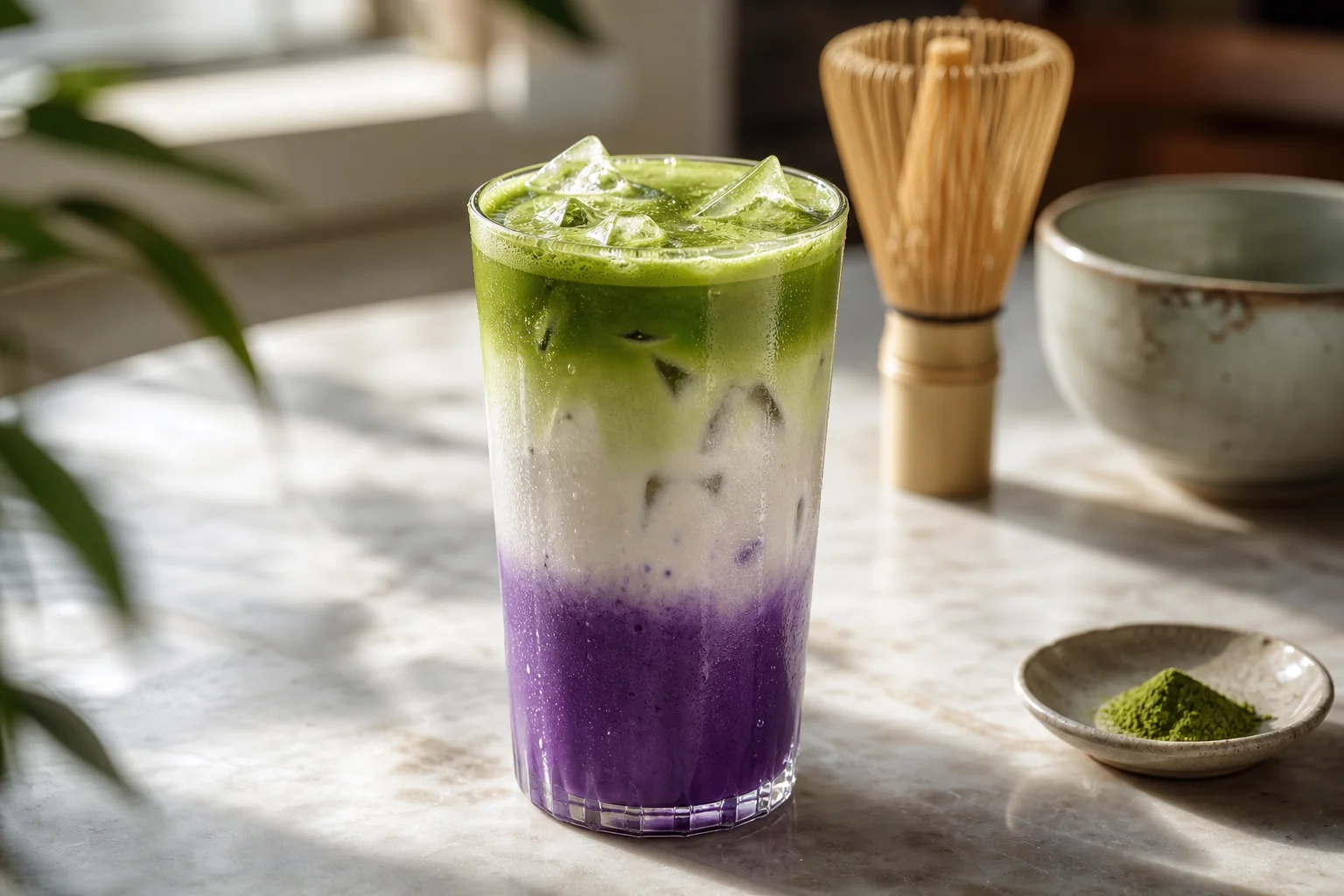
Over the past few seasons, a striking two-tone beverage has taken over specialty coffee menus and social media feeds across New York, Los Angeles, London, Tokyo, and Sydney: Ube Matcha.
With its high-contrast aesthetic—a rich royal violet layer resting beneath a brilliant jade-green crown—this eye-catching drink has transitioned from a niche specialty offering into a permanent menu anchor. But is Ube Matcha simply viral "Instagram bait," or does it represent a deeper evolution in beverage formulation, sensory balance, and café profitability?
1. The Sensory Harmony: Why Green and Purple Complement Each Other
The culinary pairing of Japanese green tea with Southeast Asian purple yam operates on both optical color theory and neurosensory flavor balancing.
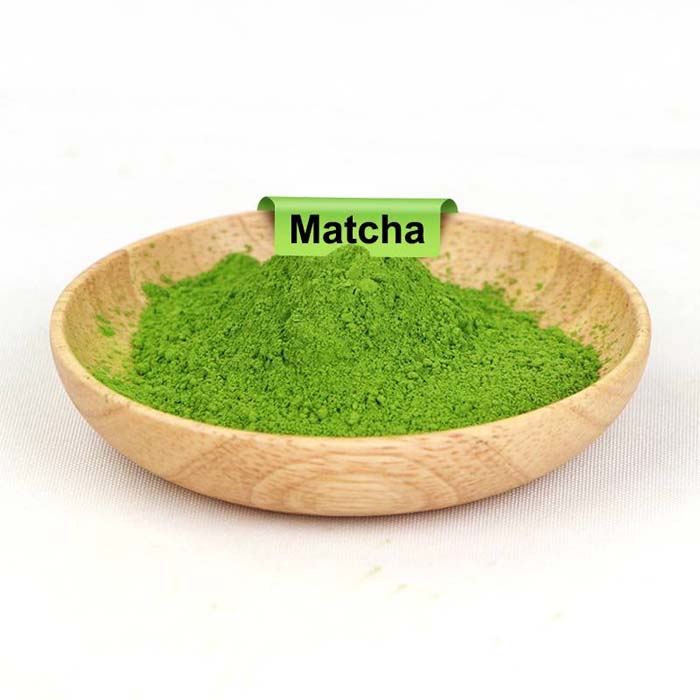
The Green Element (Matcha)
- Sensory Notes: Grassy, vegetal, vibrant chlorophyll, savory umami (L-theanine), and pleasant bittersweet finish.
- Optical Role: Electric jade-green (#4D7F43) provides clean, natural aesthetic brightness.
- Functional Benefit: Moderate caffeine (~60–70mg per 2g serving) for sustained alertness without energy crashes.
The Purple Element (Ube)
- Sensory Notes: Creamy, sweet, vanilla-like, warm nutty undertones with natural coconut-adjacent richness.
- Optical Role: Deep royal violet (#6D3B7D) derived from natural anthocyanin pigmentation.
- Functional Benefit: Naturally 100% caffeine-free, softening the sharp edges of green tea astringency.
2. The Fluid Dynamics: The Physics of Flawless Drink Layering
Why do so many amateur attempts at Ube Matcha collapse into an unappealing, murky grey within seconds? Flawless, sharp multi-tier drink separation requires mastering specific gravity (density) and Brix sugar concentration.
| Layer Position | Component Formulation | Specific Gravity / Brix Density | Physical Layering Function |
|---|---|---|---|
| Bottom Tier (Purple) | Ube Puree / High-Solids Ube Syrup | Heavy Density (Brix ~25° – 35°) | High dissolved sugar and starch solids anchor the layer firmly to the bottom of the glass. |
| Middle Tier (White / Neutral) | Chilled Oat Milk / Coconut Milk + Ice Buffer | Medium Density (Brix ~10° – 14°) | Ice cubes create physical surface tension, slowing liquid convection and preventing bleed. |
| Top Tier (Green) | Whisked 2g Matcha + 60ml 75°C Water | Light Density (Brix ~3° – 5°) | Microfine suspension floats cleanly on the surface when poured gently over an ice bridge. |
3. Commercial Formulation Architectures for Beverage Brands
Foodservice operators and beverage developers can execute Ube Matcha across four distinct operational architectures depending on kitchen space and speed requirements.
Classic Layered Iced Latte. 20–30ml of ube syrup at the bottom, topped with cold oat milk and a floating shot of whisked barista matcha. Fast 30-second ticket time.
Inverted Modern Foam. Iced matcha tea or light matcha latte topped with a thick, velvety purple cold foam whipped with ube powder and heavy/coconut cream.
Ready-to-Drink Format. Retort or aseptic bottled latte pre-blended for uniform pastel-sage-purple color with stable hydrocolloid suspension.
Dual-Tone Frozen Treat. Pairing rich purple ube soft-serve with electric green matcha soft-serve in a dual-swirl cone for maximum dessert margin.
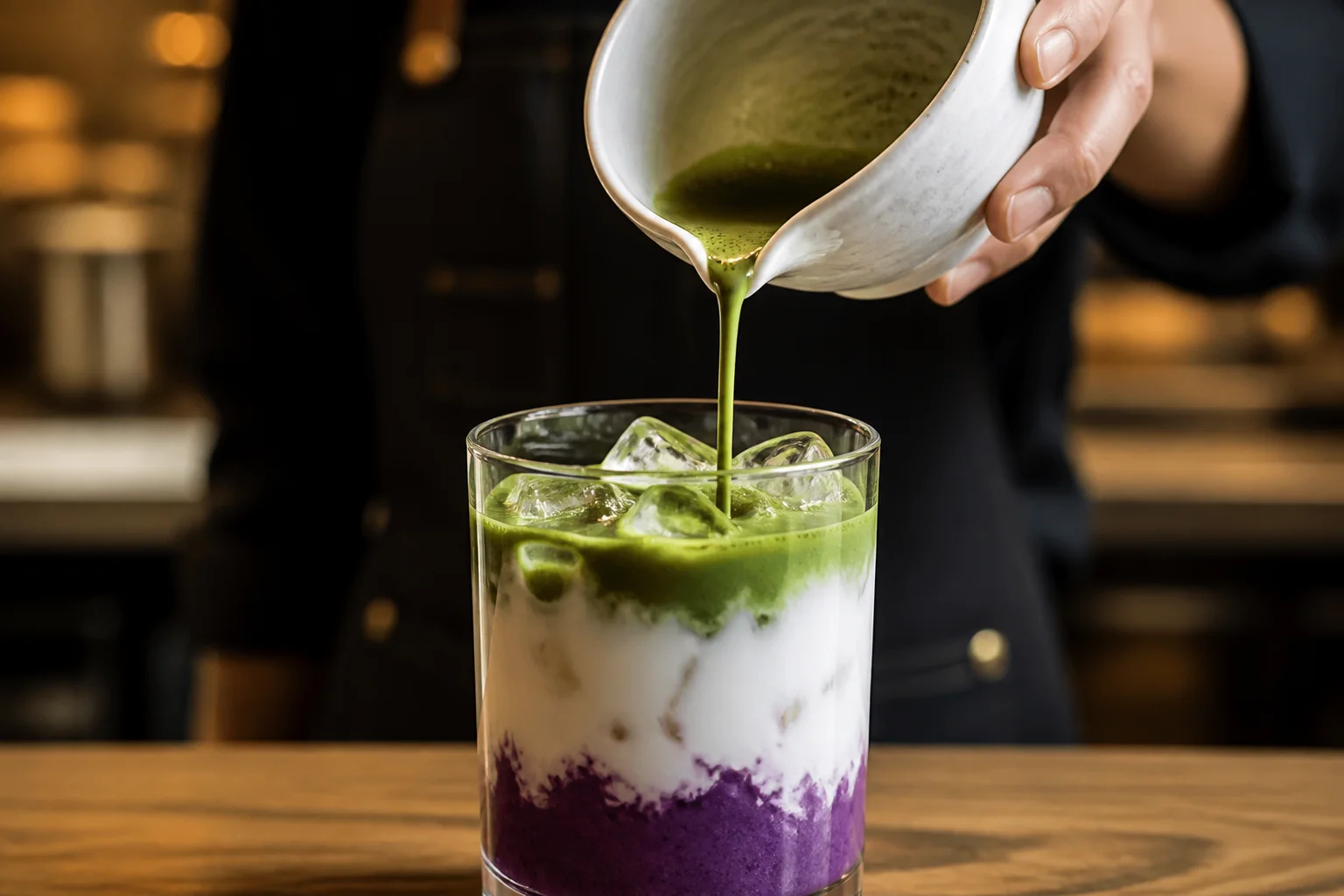
When pouring the matcha layer over the milk in a café setting, using a spouted ceramic katakuchi bowl allows baristas to direct a laminar, gentle flow over an ice cube, ensuring razor-sharp color separation every single time.
4. The B2B Business Case: Pricing Power, Margins & Plant-Milk Upsells
Ube Matcha is not just a visual novelty—it is one of the highest-margin specialty drink formats in the modern beverage playbook.
5. Sourcing Authenticity: Real Dioscorea Alata vs. Fake Colored Starches
As the ube trend exploded globally, supply chains became flooded with adulterated powders. Ingredient procurement teams must strictly audit supplier specifications.
| Quality Indicator | Authentic Pure Ube Powder (Dioscorea alata) | Adulterated Commercial Blend |
|---|---|---|
| Botanical Origin | 100% genuine purple yam (Dioscorea alata). | White potato/cornstarch base blended with synthetic food dyes. |
| Color Source | Natural plant anthocyanins (deep royal violet). | Artificial Red #40 and Blue #1 coloring agents. |
| Flavor & Aroma | Subtle vanilla, nutty, coconut-sweet, earthy. | Overly sweet, synthetic candy-like, lacking earthy body. |
| Matcha Synergy | Softens green tea bitterness and enriches mouthfeel. | Artificial flavor clashes harshly with natural tea catechins. |
Natural ube anthocyanins are sensitive to pH changes. When formulating commercial RTD drinks or baked goods, maintain a stable slightly acidic to neutral pH (5.5–6.5) to prevent natural purple colors from shifting toward muddy brown or grey tones.
6. The 4-Step Café Barista Workflow for Peak-Hour Speed
Implement this high-speed beverage assembly protocol to serve picture-perfect Ube Matcha lattes in under 30 seconds.
Pump purple base
Dispense 25ml of prepared high-Brix ube syrup into the bottom of a clear 12oz–16oz glass.
Fill ice & milk
Fill glass with ice to 80% capacity and pour chilled oat milk or coconut milk to create a clean mid-tier.
Whisk matcha shot
Whisk 2.0g barista-grade matcha with 60ml 75°C water in a spouted katakuchi bowl for 15 seconds.
Float over ice
Pour matcha gently over top ice cubes to create a floating jade-green crown with zero color bleed.
Conclusion: A Modern Classic Built on Real Synergy
Ube Matcha is not a passing gimmick. It represents the maturation of fusion beverage craftsmanship—uniting the ancient ritual of Japanese green tea with the vibrant tropical indulgence of Southeast Asian botanicals.
- Sensory perfection: Vanilla-nutty sweetness neutralizes green tea astringency.
- Physics-driven beauty: Specific gravity separation creates viral, high-contrast drink layers.
- Commercial powerhouse: High ticket prices, 75%+ margins, and viral organic social reach.
- Authenticity matters: Sourcing verified 100% pure purple yam powder and shade-grown matcha protects brand reputation.
By pairing authentic, single-origin botanical powders with standardized barista workflows, your café or beverage brand can capture the full value of this global flavor phenomenon.
Ube Matcha FAQ
What does an Ube Matcha Latte taste like, and why are the flavors paired together?
Ube Matcha creates a balanced flavor harmony where the grassy, vegetal, and umami notes of Japanese green tea are softened by the sweet, vanilla-like, and nutty coconut notes of purple yam, eliminating harsh astringency while creating an indulgent beverage.
How do you achieve sharp, distinct layers between the purple ube and green matcha?
Layering relies on fluid density (specific gravity). The dense, high-Brix ube syrup or puree sits at the base; a middle milk layer is poured over ice cubes to act as a physical buffer; and the light, low-density whisked matcha concentrate is poured gently over the ice to float on top.
What is the difference between authentic Ube powder and artificial purple yam flavoring?
Authentic Ube powder is 100% pure dehydrated purple yam (Dioscorea alata) rich in natural anthocyanins and mild earthy-vanilla aroma. Low-grade commercial alternatives often mix white potato or cornstarch with artificial Red #40 and Blue #1 food dyes.
Which milk base pairs best with an Ube Matcha Latte?
Coconut milk is the traditional Southeast Asian pairing that elevates ube's tropical notes. Barista-edition oat milk is the leading café choice, providing natural grain sweetness, creamy microfoam, and clean plant-based appeal without masking delicate tea catechins.
Why is Ube Matcha such a profitable addition to café and tea shop menus?
Ube Matcha commands premium menu pricing (often $6.50 to $7.50 per serving, roughly $1.00 to $1.50 above standard lattes) while maintaining high 75% to 80% gross profit margins, driven by extreme social media visual appeal and dairy-alternative upsells.
How can high-volume cafés standardize Ube Matcha preparation during morning peak hours?
Cafés standardize service by batching a pumpable ube simple syrup or pre-portioned purée base, utilizing squeeze bottles for rapid cup dosing, and pouring pre-whisked barista matcha from spouted ceramic katakuchi bowls in under 30 seconds.
Sourcing Authentic Ube Powder & Premium Bulk Matcha?
From 100% pure Dioscorea alata purple yam powder to vibrant shade-grown ceremonial and barista matcha, AMULYN supplies beverage innovators, café chains, and food manufacturers with reliable bulk supply, technical formulation support, and verified lot COAs.
Submit an Inquiry


