
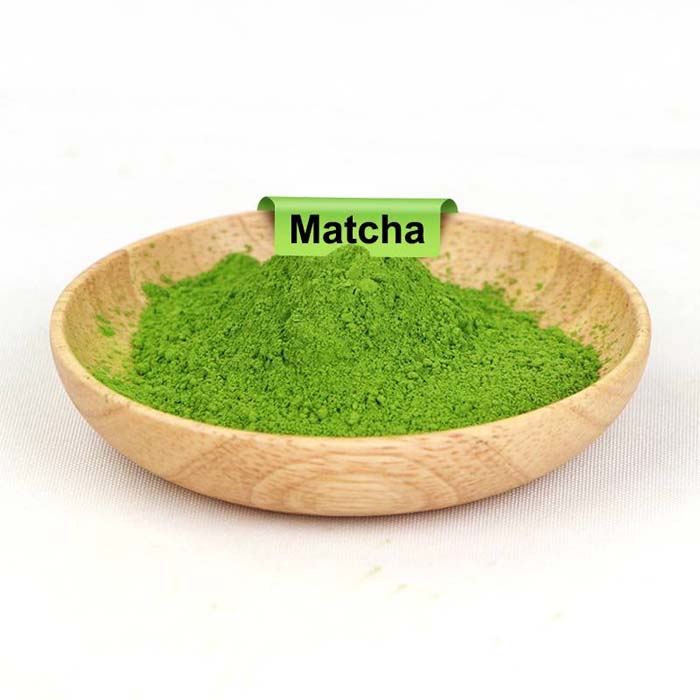





















The global beverage market is witnessing a "Green Revolution." From Starbucks' ubiquitous Pumpkin Spice Latte to high-protein RTD shakes, Matcha green tea has transcended its traditional roots to become a modern functional staple. Consumers are drawn to its vibrant color, earthy flavor profile, and high concentration of antioxidants (EGCG).
However, for food scientists and product developers, incorporating matcha into dairy or plant-based systems is a formulation nightmare. The fundamental challenge lies in the physics of the powder: Matcha is not a soluble extract; it is a suspension of insoluble plant fibers (cellulose), proteins, and pigments. Without precise engineering, these particles will succumb to gravity, resulting in an unappealing layer of green sludge at the bottom of the bottle.
This guide explores the multi-faceted approach to solving sedimentation, moving beyond simple viscosity to explore colloidal stability, yield stress, and processing dynamics.
1. The Micro-Mechanisms of Instability
To solve sedimentation, we must look at the forces governing the suspension. It is not merely about "thickness"; it is about the battle between gravity and intermolecular forces.
This means that if you reduce the particle size by half, the settling speed decreases by a factor of four. Therefore, particle size reduction is exponentially more effective than simply thickening the liquid.
1.1 The "Tea Cream" Phenomenon
Distinct from physical settling is chemical precipitation, often called "Tea Cream." This occurs when polyphenols (catechins) and caffeine form complexes through hydrogen bonding as the liquid cools.
In a dairy matrix, this is complicated by the presence of casein micelles. The polyphenols can bind to the milk proteins, causing them to flocculate (clump together). This creates a hazy,絮状 appearance that is chemically distinct from the heavy green sediment at the bottom.
2. Raw Material Selection: Particle Engineering
Not all matcha is created equal. The choice of powder grade is the first variable in your formulation equation.
| Feature | Culinary Grade | Nano-Milled / Premium | Impact on Stability |
|---|---|---|---|
| Average Particle Size | 15 - 25 µm | 4 - 8 µm | Smaller particles remain suspended longer due to Brownian motion. |
| Surface Area | Lower | Very High | High surface area requires better wetting agents to prevent "fish eyes". |
| Morphology | Irregular, jagged shards | Spherical, uniform | Uniform shapes pack differently and interact more predictably with gums. |
Recommendation: For high-end RTD beverages, "Nano-Matcha" (Jet Milled) is preferred. While more expensive, it drastically reduces the load on your stabilizer system and provides a smoother mouthfeel, eliminating the "gritty" sensation.
3. The Hydrocolloid Strategy
Water is not heavy enough to hold up matcha. We need a matrix that provides a high Yield Stress—the minimum force required to make the fluid flow. If the yield stress is higher than the gravitational force on the particle, the particle will not move.
3.1 Gellan Gum: The Suspension King
Low Acyl Gellan Gum is arguably the most powerful tool for particulate suspension. It forms a rigid, brittle, and transparent gel network. Even at very low dosages (0.02% - 0.05%), it creates a "floating" matrix that immobilizes heavy particles without making the beverage slimy or thick.
3.2 MCC & Carrageenan: The Classic Duo
Microcrystalline Cellulose (MCC) is often co-processed with CMC or Carrageenan. This combination creates a thixotropic network (shear-thinning). The drink pours easily (shear breaks the bonds) but thickens instantly in the bottle (bonds reform), preventing sedimentation during shelf life.
3.3 Plant-Based Challenges
If formulating with Oat or Almond milk, the protein content is lower than dairy. You cannot rely on protein-tea interactions for stability. Instead, rely on Locust Bean Gum (LBG) or Guar Gum synergies to build the necessary body.
4. Processing: The Art of Dispersion
A perfect formula can be ruined by poor processing. The hydrophobic nature of tea leaf wax requires aggressive wetting strategies.
The "Slurry" Method
Never dump dry powder into a full tank. Pre-mix matcha with a small amount of hot water (80°C) or a sugar/glycerin solution to create a slurry. This wets the surface area before dilution.
High-Shear Mixing
Use a high-shear mixer (e.g., Silverson) to break down agglomerates. The goal is to separate every individual particle before it enters the pasteurization loop.
Two-Stage Homogenization
Apply 2000-2500 psi (Stage 1) to smash clusters, followed by 500 psi (Stage 2) to prevent re-agglomeration. This ensures a uniform particle distribution.
5. Sensory & Quality Control
Stability isn't just about physics; it's about perception. A stable matcha drink must also pass sensory evaluation.
Fix: Fix: Balancing the formula with dairy proteins or adding a small amount of sodium bicarbonate can neutralize the astringency without altering the flavor profile significantly.
5.1 Color Retention
Oxidation is the enemy of matcha. The vibrant green chlorophyll can turn olive-brown if exposed to heat or light for too long.
- Chelating Agents: Ingredients like EDTA or Sodium Hexametaphosphate (SHMP) can sequester metal ions (Iron/Copper) that catalyze oxidation.
- Packaging: For clear bottles, UV-blocking sleeves are essential to prevent photodegradation.
6. Troubleshooting Guide
Use this table to diagnose common stability issues in your pilot plant trials.
| Issue | Potential Cause | Corrective Action |
|---|---|---|
| Hard Sediment | Particle size too large; Yield stress too low. | Switch to Nano-matcha; Increase Gellan Gum concentration. |
| Flocculation (Clumps) | Tea Cream formation; pH instability. | Check pH (keep > 6.6); Add buffering salts. |
| Browning Color | Oxidation; High heat exposure. | Add chelating agents; Reduce retort temperature if possible. |
| Grainy Mouthfeel | Poor hydration; Agglomerates. | Improve high-shear mixing time; Check homogenization pressure. |
7. Technical FAQ
Can I use Matcha in acidic dairy drinks (pH < 4.5)?
It is challenging but possible. At low pH, casein precipitates and tea catechins become unstable. You must use acid-stable stabilizers like High Methoxyl Pectin or Soy Polysaccharide. Additionally, the color will naturally shift from green to yellowish-olive due to the acidity.
What is the shelf life of a properly stabilized Matcha drink?
With the right stabilizer system (e.g., Gellan/MCC) and proper homogenization, physical stability can be maintained for 6 to 12 months. However, flavor degradation (loss of fresh tea aroma) often occurs before physical separation.
Does organic sugar help with dispersion?
Yes. In the "Slurry Method," mixing matcha powder with dry sugar (1:5 ratio) before adding liquid helps separate the particles physically, preventing them from clumping when they hit the water.


